

A Reflective Note for CAFINA (AUCHI) 30th Thursday 2025
Fr. Daniel Evbotokhai
- INTRODUCTION
St. Jerome, who translated the Bible into Latin (the Vulgate), made a timeless statement: “Ignorance of Scripture is ignorance of Christ.” This means that one cannot truly know, love, or follow Jesus without knowing His Word. The Bible is not merely a historical document or a collection of moral tales; it is the living voice of God speaking to His people. To neglect Scripture is to silence Christ in your life and to gradually drift from the truth of the Gospel.
When believers abandon Scripture, faith becomes shallow, emotions replace conviction, and human opinions take the place of divine revelation. This is how superstition thrives and deception spreads. Without sound catechesis to form the mind and Scripture to feed the soul, people become spiritually illiterate—unable to discern truth from error. Eventually, such ignorance breeds doubt, skepticism, and ultimately atheism.
A faith not rooted in the Word of God and nourished by proper catechesis will wither under the storms of modern ideologies. 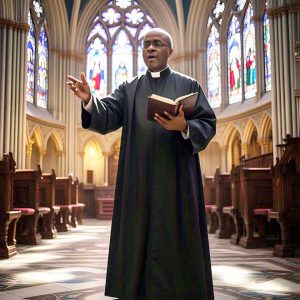 The crisis of faith we witness today is not primarily caused by science or secularism—it is caused by Christians who no longer study their faith. When the Bible is closed and catechesis is ignored, the heart grows cold, and the mind becomes vulnerable to unbelief.
- THE TRAGEDY OF BIBLICAL IGNORANCE “My people are destroyed for lack of knowledge.” (Hosea 4:6)
Too many Christians today are spiritually weak because they are scripturally empty. They chase anointing oil but ignore the anointed Word. They buy handkerchiefs and “holy water,” yet neglect the Bible that carries living water. They listen to every so-called prophecy, but refuse the Prophet of prophets who speaks through Scripture. They run to deliverance services, yet flee from discipleship classes.
Ignorance of God’s Word is the devil’s easiest weapon. Until you open your Bible, you remain open to manipulation. When you don’t know the truth, every lie sounds prophetic. Superstition will drain your spirit, but Scripture will sustain your soul. Miracles may excite you, but only the Word can establish you.
The tragedy of today’s Church is not the absence of power but the absence of knowledge. A believer without Scripture is like a soldier without a gun—loud, but defeated. Return to the Word, and your faith will rise above fear, confusion, and deception. The tragedies are as follow:
- Spiritual Deception: When believers do not know Scripture, they become easy prey for false prophets and deceptive teachings. Without discernment, every “new revelation” sounds divine. Matthew 22:29 says “You are in error because you do not know the Scriptures or the power of God.” Also confirm (2 Timothy 4:3–4)
- Weak Faith and Spiritual Immaturity: Biblical ignorance produces weak Christians who rely on emotions, miracles, and personalities rather than truth. They are easily shaken by trials and trends. Ephesians 4:14 says “Then we will no longer be infants, tossed back and forth by the waves, and blown here and there by every wind of teaching.” Also confirm (Romans 10:17)
- Moral and Doctrinal Confusion: Without the light of Scripture, moral standards collapse, and sin becomes normalized. The Church loses its prophetic voice when the Word is no longer the standard. Psalm 119:105 says “Your word is a lamp for my feet, a light on my path.” Also confirm (Isaiah 5:20)
- Rise of Superstition and Idolatry: When people neglect the Bible, they replace divine revelation with objects, rituals, and personalities. Faith shifts from God’s Word to man-made symbols and practices. Jeremiah 10:2–5 note a warning against following empty customs instead of God’s truth. Also confirm (Exodus 20:3–5)
- Apostasy and Loss of Salvation: Ultimately, ignorance of Scripture leads to rebellion and falling away from the faith. When truth is abandoned, sin becomes justified, and salvation is taken for granted. Hosea 4:6 says “My people are destroyed for lack of knowledge.” Also confirm (2 Thessalonians 2:10–12).
3.THE POWER OF THE WORD
“The Word of God is living and active…” – Hebrews 4:12. God’s Word transforms. It brings clarity where confusion reigns. It builds faith, breaks strongholds, and reveals truth. The Word of God is not just information — it is revelation, the living voice of God that forms, nourishes, and transforms the believer. Scripture shapes our faith, guards our hearts, and directs our journey toward salvation. As Dei Verbum teaches, “In the sacred books, the Father who is in heaven meets His children with great love and speaks with them” (DV, 21).
Benefits of Knowing Scripture
- It Gives Direction: “Your word is a lamp to my feet and a light to my path.” —(Psalm 119:105). Scripture enlightens our choices and gives clarity in moments of confusion. In a world of moral darkness, the Word serves as the compass of truth. Dei Verbum (21) calls Scripture “a lamp shining in a dark place.” The Church urges all believers to “approach the sacred text frequently” so as not to walk in spiritual blindness (CCC 131).
- It Builds Faith: “Faith comes by hearing, and hearing by the word of Christ.” — (Romans 10:17). Scripture awakens and strengthens faith by revealing God’s promises and fidelity. Without the Word, faith dries up and emotion replaces conviction. Pope Benedict XVI in Verbum Domini (n. 25) teaches that “the Word of God itself nourishes faith, which finds its source and strength in God’s word.”
- It Brings Freedom: “You shall know the truth, and the truth shall set you free.” — John 8:32. The Word liberates us from ignorance, sin, and fear. True freedom is not the absence of rules but the presence of truth that transforms the mind and heart. The Catechism of the Catholic Church (CCC 1741) affirms that “freedom attains perfection when directed toward God.” Knowing Scripture aligns our will with divine truth, freeing us from moral and spiritual slavery.
- It Offers Protection: Jesus resisted the devil’s temptations in the desert by standing on the authority of Scripture (Matthew 4:1–11). The Word of God is our defense against lies and spiritual attacks. Verbum Domini (n. 83) reminds us that the Word “is the Church’s strength and the soul of her mission.” The believer who is filled with Scripture cannot be easily deceived or overcome by evil.
- It Nourishes Spiritual Growth: “Like newborn babes, crave the pure spiritual milk, so that by it you may grow in salvation.”— 1 Peter 2:2. Just as food nourishes the body, the Word nourishes the soul. Regular meditation on Scripture leads to maturity, holiness, and fruitfulness in Christian life. Dei Verbum (25) urges pastors and faithful alike to “gladly put themselves in touch with the sacred text,” for “in the sacred Scriptures the Church constantly finds her nourishment and her strength.”
4.THE DANGER OF SUBSTITUTES
Today there is the danger of Catechetical and Faith substitutes in the Church. We are living in a generation where ceremonies are replacing depth and truth, activities and financial drive are gradually driving out souls; faith is being replaced with feelings, hymns are being replaced by trite phrases called choruses; catechesis with convenience; fashion replacing passion. The tragedy of today’s Church is not the absence of devotees, but the rise of devotions and religious substitutes. We now see emotionalism without doctrine, spirituality without truth, and enthusiasm without understanding.
Many Christians now prefer motivational talks to sound catechesis, entertainment to enlightenment, and popularity to orthodoxy. The result is a faith that excites the flesh but starves the soul. As St. Paul warned, “For the time is coming when people will not endure sound teaching, but having itching ears they will accumulate for themselves teachers to suit their passions” (2 Timothy 4:3).
When catechesis is neglected, the Church becomes noisy but empty — filled with followers who shout “Amen” but cannot explain what they believe. Faith without formation leads to confusion, superstition, and moral compromise. As Dei Verbum (no. 25) teaches in the words of St. Jerome “Ignorance of the Scriptures is ignorance of Christ.” The same is true of catechesis: ignorance of sound doctrine is ignorance of the Church herself.
The modern believer must beware of faith substitutes — emotional excitement mistaken for spiritual encounter, charisma mistaken for character, and miracles mistaken for maturity. Genuine faith is not built on spectacles but on Scripture; not on trends but on truth.
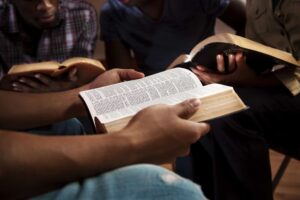 Therefore, the Church calls for a renewal of catechetical zeal — to teach, form, and root believers in the Word of God and the doctrines of the faith. As Pope Francis said in Evangelii Gaudium (no. 175): “All Christian formation consists of entering more deeply into the kerygma.” Without catechesis, evangelization becomes shallow; without doctrine, devotion becomes dangerous. Let us therefore return to authentic formation, where knowledge feeds faith, truth strengthens love, and catechesis produces conviction. The Church does not need more noise; she needs more knowledge of Christ.
5.RECOMMENDATION: PRACTICAL ASSIGNMENTS FOR FORMATORS
1. Practice the Principles of Catholic Biblical Interpretation: The Catholic Church teaches that Scripture must be read through three interconnected lenses, the unity of Scripture, the living Tradition of the Church, and the analogy of faith (Dei Verbum, no. 12).
- Unity of Scripture: The Bible is one story of God’s plan of salvation. Every passage, from Genesis to Revelation, points to Christ. Therefore, no verse should be isolated from the whole message of redemption. For instance, the Old Testament sacrifices find fulfillment in the sacrifice of Christ on the Cross.
- Sacred Tradition: The same Holy Spirit who inspired the Scriptures continues to guide the Church in understanding them. Tradition preserves the authentic interpretation handed down from the Apostles. This means the Church reads the Bible within the faith community, not as a private opinion.
- Analogy of Faith: Every interpretation must harmonize with the totality of Catholic faith. A verse cannot be explained in a way that contradicts Church doctrine or the core truths of salvation. For example, understanding God’s mercy must never deny His justice.
Together, these principles ensure that biblical interpretation remains faithful, balanced, and rooted in divine revelation rather than personal opinion.
- Scripture Immersion Challenge: To deepen the sense of scriptural narratives against twisted narrative.
- Choose one Gospel (e.g., Luke) and study it personally for four weeks.
- Each week, identify one truth to teach and one virtue to practice.
- Share how the Scripture shaped your teaching or decision-making.
- Dei Verbum (25) – “Let them remember that prayer should accompany the reading of Sacred Scripture.”
- Catechism Study Circle: To deepen doctrinal understanding and prevent half-truths. Doctrinal clarity!
- Have a copy of the Catechism of the Catholic Church (Compulsory).
- Have a copy of the Code of Canon law of the Church.
- Have a copy of the Second Vatican Council.
- Have a copy of the History of the Catholic Church (development of truth).
- Read one section of the Catechism of the Catholic Church weekly (e.g., Part One: The Profession of Faith).
- Join Catechism teachers in your parish/society.
- Bring out the evangelical character in the group you belong.
- Identify and make a disciple in your neighborhood or office.
- Summarize each week’s study in two sentences and share in market, class or parish WhatsApp group.
- Personal Witness Reflection: To make catechesis personal, not mechanical.
- Write a one-page reflection titled “How the Word of God Has Changed My Teaching.”
- Share it during our next formators’ meeting or class.
- Evangelii Nuntiandi (41) – “Modern man listens more willingly to witnesses than to teachers.”
- CONCLUSION
In conclusion, the ignorance of Scripture and catechesis remains one of the greatest threats to authentic Christian faith today. The Catholic Church calls every believer to rediscover the Word of God through sound teaching, guided by Tradition and the Magisterium. Scripture is not merely information but transformation, it forms disciples, strengthens faith, and leads to Christ Himself. When the Bible is opened and lived, the Church is renewed, faith is deepened, and Christ is made known in every generation.
May Lord, give us hunger for Your Word. Deliver us from ignorance and deception. May we know You through Scripture, live by Your truth, and teach others to do the same. Amen.
REFERENCES
Catechism of the Catholic Church. (1994). Libreria Editrice Vaticana.
Congregation for the Clergy. (1997). General Directory for Catechesis. Vatican City: Libreria Editrice Vaticana.
Francis. (2019). Aperuit Illis (Motu Proprio on the Sunday of the Word of God). Vatican City: Libreria Editrice Vaticana.
Second Vatican Council. (1965). Dei Verbum (Dogmatic Constitution on Divine Revelation). In The Documents of Vatican II. Vatican City: Libreria Editrice Vaticana.
The Holy Bible. (2001). The New Jerusalem Bible. New York: Doubleday.
