
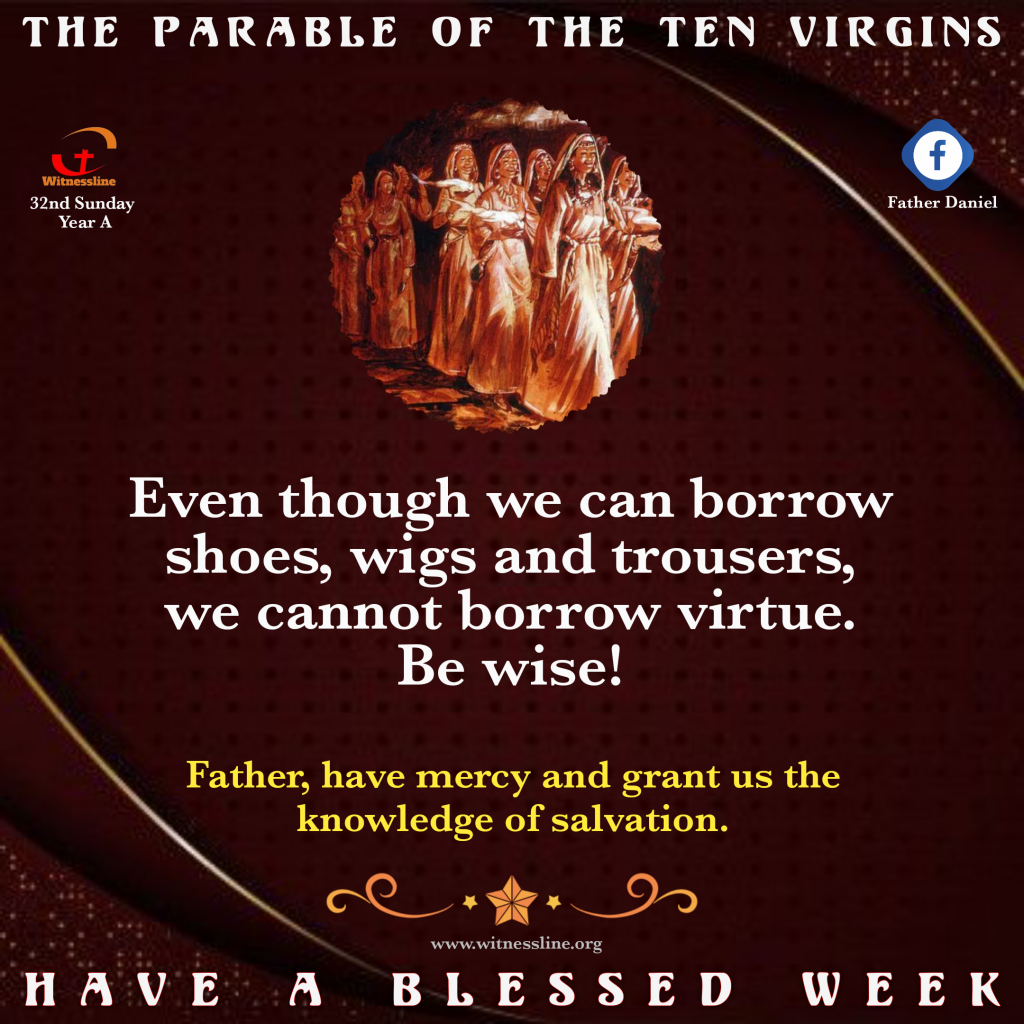
The Parable of the Ten Virgins
Wisdom 6:12–16; Psalm 63; 1 Thessalonians 4:13–18; Matthew 25:1–13
The parable of the Ten Virgins has been described as a “watching parable. Ten virgins awaited a bridegroom; five brought enough oil for their lamps; they arrived early and were rewarded. They were called wise virgins! The other five had limited oil; they attempted to borrow but were denied. They went for oil but arrived late. They were regarded as foolish virgins. This parable has a clear eschatological theme. It calls us to watchfulness, readiness, anticipation, and spiritual preparation for the last day. Other lessons therein include:
Preparation: We all need to prepare for the coming of Christ. The wise virgins had enough oil for their lamps and were ready when the bridegroom arrived, while the foolish virgins were caught unprepared. With the availability and accessibility of ministers and the sacraments today, are we still going to be caught unprepared? For unpreparedness, the foolish virgins were shut out of the wedding feast. We will suffer the consequences if we fail to prepare. Heaven is a prepared place for prepared people. (John 14:3).
Personal Responsibility: Responsibility is the state or quality of being accountable for one’s actions, obligations, and duties. We have to be responsible and not be carried away by the trends of the day. Like the virgins, we are responsible for our individual oil for the later days. Even though we can borrow shoes, wigs, and trousers, we cannot borrow virtue. Be wise! Though they were virgins, they were regarded as foolish virgins. You can be a virgin and be foolish. Virtue is not only about virginity, but also about the holistic character of a person. Spiritual preparedness cannot be shared or transferred.
Spiritual Resources: Spiritual resources are elements that individuals draw upon to nurture and strengthen their spiritual well-being. The oil in the lamps represents spiritual resources or assets. These resources could be the Bible, epigraphy (lives of saints), the sacraments, faith, prayers, meditation, etc. While the foolish virgins disregarded these resources, the wise virgins recognized their importance and developed them.
Christ’s Return: This parable emphasizes how difficult it is to predict Christ’s return. You can predict matches and win, but you can’t predict Christ’s coming. Christ will return. The unexpected arrival of the bridegroom highlights the need to be prepared at all times and to live in anticipation of the future. Many have tried to predict Christ’s coming, but they failed. All the fanciful calculations and dates failed. Jesus says, “But about that day or hour no one knows, not even the angels in heaven, nor the Son, but only the Father.” (Matt. 24:36).
Seek Jesus: The first reading exhorts us to seek wisdom so that those who see her will find her. Literally speaking, we need wisdom to choose wisely in today’s world. Moreso, in accordance with the scriptures, Jesus Christ is the Wisdom of God, and those who seek him will find him. Similarly, today’s Psalm speaks of seeking God. Beloved, what do you seek—Jesus or something else? (Matt. 6:33) If we seek him, even though we die, we shall find life and hope, just as Paul admonished the Thessalonians in the second reading. (1Thess.4:13-18).
Let us pray.
Almighty and merciful God, graciously keep from us all adversity, so that, unhindered in mind and body alike, we may pursue in freedom of heart the things that are yours. Through our Lord Jesus Christ, your Son, who lives and reigns with you in the unity of the Holy Spirit, God, for ever and ever. Amen.
Fr. Daniel Evbotokhai
