
The Conditions of the Hearts and their Spiritual Results
ISAIAH 55:10-11/PSALMS 65:10, 11, 12-13, 14/ROMANS 8:18-23/ MATTHEW 13:1-23
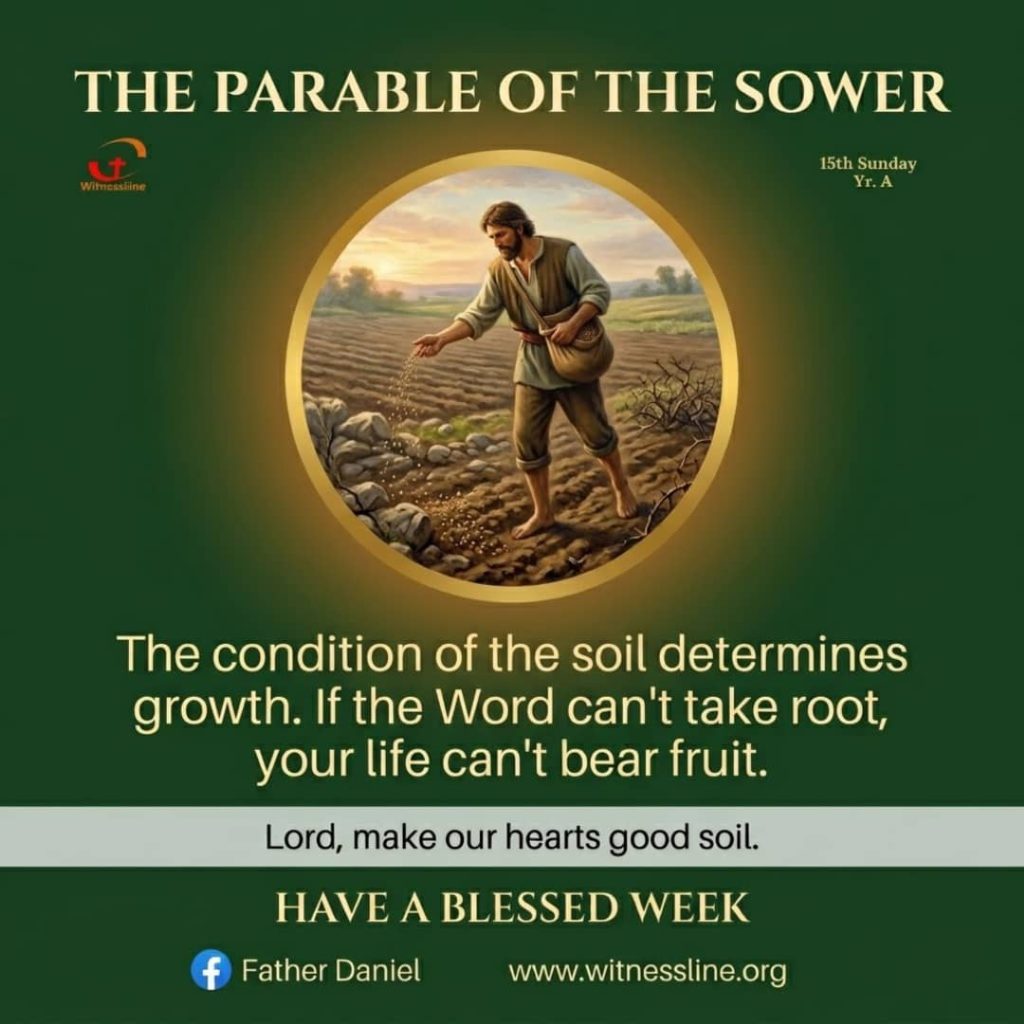
The first reading and the gospel reading of today present us with the themes of seed and sower. In the first reading Isaiah says that both rain and snow water the earth and cause the seeds to grow and provide us with food. Similarly, the gospel noted that like seeds the word of God is spread across the world, it grows, and provides us with spiritual nourishment. However, this parable does not say much about the quality of the seed but more of the soil. Therefore, it can be regarded as the parable of the soil or the Parable of the Four Soils. When it comes to farming as the parable of the sower presents to us, there are factors that determine proper growth. The condition of the soil can affect the growth of the seeds. In the same way, the condition of our hearts determines the growth of God’s Word in our spirit. So we shall be looking at the some kinds of hearts and their spiritual results.
Unresponsive heart: This kind of heart can also be regarded as the indifferent or uncaring heart. The seed that fell on the path refers to the word of God on an uncaring or indifferent heart. The heart is indifferent or unresponsive because of bias and hatred for the speaker, or because it does not like to be reminded of certain things. There are people like this, no matter what you say in as much as these factors are there they will never understand you and they will not respond. It is a common belief that you will never comprehend mathematics if you despise your math teacher.
Impulsive heart: This kind of heart can also be termed as the rash or reckless heart. The seed that fell on the rocky soil can be said to have fallen on the reckless soil. The seed did not take any root in the soil. This refers to the heart that has no inner conviction. The seed is given to them but deep within them they see no reason for it and so it withers. Christians are to live by an inner conviction of the word of God. If you are not convinced about it there is no way it can produce result for you.
Preoccupied heart: This refers to the seed that fell among thorns. Thorns are the cares of the world and the lure for wealth. These things preoccupy the heart of man and so the word of God has no space for growth. Today, the hearts of many youths are preoccupied with the desire for riches and that is why they fall into temptation and as 1Tim6, 9-10 says they are trapped by many senseless and harmful desires that lead them to destruction. Many people are backward in the things of the Kingdom today simply because of the preoccupation of their hearts. Yet St. Paul reminds us that the sufferings of this present life cannot compare with the glory that awaits us (Romans 8:18). The worries of life will always exist, but instead of allowing them to destroy our vocation, we should let them become ladders that draw us closer to God and help us bear lasting fruit.
Depth and Speed Heart: Depth is more important than speed: The rocky soil received the Word of God “immediately and with great joy”, but it had no deep roots (Matthew 13:20-21). The problem was not excitement; it was the absence of spiritual depth. Many people are moved by powerful sermons, worship songs, or church programs, yet they return to the same sinful habits because the Word has not taken root in their hearts. Christianity is not measured by how loudly we worship but by how faithfully we live. As St. Paul says, “Be rooted and built up in him, strengthened in the faith” (Colossians 2:7). Roots are hidden, but they are what produce visible fruit. A deep relationship with Christ will always sustain us when emotions fade and trials come. If the Word does not take root, it will not bear fruit.
Thorns and Seed Heart: Thorns grow quietly, Jesus teaches that the thorns did not destroy the seed immediately; they grew alongside it until they choked it (Matthew 13:7, 22). In the same way, sin and worldliness rarely destroy a person’s faith overnight. They begin as small distractions and gradually take over the heart. Jesus identifies three dangerous thorns: the worries of life, the deceitfulness of riches, and the desire for other things (Mark 4:19). Sadly, many people do not abandon Christ because of persecution but because they become too comfortable, too busy, or too attached to worldly success. If we do not regularly remove these “thorns,” they will slowly suffocate our spiritual life and prevent us from bearing fruit for God.
Good heart: This refers to the seed that fell on good soil. A soil is good because of ploughing, weeding, watering and manuring. The good heart receives the word of God, weeds it, waters it, manures it for proper effective growth. The heart is made good by regular weeding of sins and negative habits, regular watering and nurturing of God’s word, regular meditation and reception of the sacraments. The good soil is not praised simply because it heard the Word of God, but because it bore fruit. The true evidence of conversion is not regular church attendance, Bible knowledge, or even charismatic gifts, but a life transformed by the Gospel. Jesus says, “By this my Father is glorified, that you bear much fruit and become my disciples” (John 15:8). Likewise, He reminds us, “By their fruits you will know them” (Matthew 7:16). God is not impressed by appearances or green leaves; He looks for the fruits of holiness, love, obedience, and a life that reflects Christ.
Fr. Daniel Evbotokhai
