

Fr. Daniel Evbotokhai
Introduction
“Mad in the spirit” is a problematic phrase that has become popular in the Christian atmosphere recently, particularly on social media. In a widely shared TikTok video a minister openly urged “one thousand people to come and be mad in the spirit”. As though it was a call to radical obedience and holy courage against sin; to my greatest surprise, what followed was a prayer that was characterized by turmoil, commotion, emotional outbursts, and obvious chaos rather than reverence or depth.
A few weeks ago, a different video of some persons praying as if they were leprous went viral and a pastor stepped into the tide to call for dignity in worship. A call that is already rooted in the church’s teaching and decrees. “Mad in the spirit” and other gesticulations are gaining grounds in our campuses – the birth grounds for many movements. Today, a lot are happening in the Church regardless of denomination. We must rise to teach and correct wrongs in charity. We must go back to the scripture and the teaching of the early fathers, else we continue dwell in errors. “You are in error because you do not know the Scriptures …” (Matthew 22:29).
The present-day use of “Mad in the Spirit” generates urgent pastoral and theological question: What does it truly mean to be “mad in the spirit”? Is spiritual intensity identical with chaos? Does the Holy Spirit suspend reason, discipline, and discernment? Has biblical zeal been replaced with emotional drama? Is God honoured by confusion, or does holiness now demand theatrical excess? If such physical extremity is required, where does that leave the aged, the sick, or the contemplative? Is such a dramatic vibration an exclusive reserve for the youth? Must prayer resemble convulsions and frantic displays to be authentic?
At this juncture, it is paramount to note that this reflection is not an attack on persons but a call to biblical clarity and pastoral charity. If spiritual fire is misunderstood, it risks burning the altar it claims to defend. Scripture must remain the final authority for defining authentic Christian spirituality.
As a matter of fact, Christian Spirituality is one of the courses I did in school. In the course of study; one perennial truth was that “Christian Spirituality is Christocentric.” That is, centered on Christ. This statement implies that Christ is the perfect example of our faith, worship, prayer, and life. Letter to the Hebrews puts it this way “looking only at Jesus, the originator and perfecter of the faith,…” (Heb 12:2). Jesus is described as both the originator and the perfecter of faith. As the “author,” He initiates faith in believers, and as the “perfecter,” He brings it to completion. Hence, we have a perfect model of spirituality in Jesus Christ.
Lets delve into this concept systematically,
“Madness” in Scripture: A Human Accusation, Not a Divine Ideal
In the Bible, madness is never God’s verdict; it is a human accusation directed at divine obedience that unsettles comfort or exposes sin. The Hebrew verb shāga‘ (to act strangely or irrationally) appears frequently in political and religious contexts as a way of discrediting prophets. Not intrinsically the prophet’s character. Jeremiah 29:26 explains this clearly, where prophets are labeled “madmen,” “lunatics,” or “crazy persons” depending on the translation you are using. This language mirrors institutional hostility toward inconvenient truth, not divine endorsement of disorder. Biblical “madness” is therefore a social label applied to those who refuse compromise, not a spiritual state to be pursued or performed regardless of the prayer intensity. In fact, the deeper you go in prayer; the calmer you become. Let me put it in modern apostolic tone “In the depths of prayer, the believer is drawn into the holy presence of the Immortal One, where time loses its grip, the flesh is subdued, and the soul rests in pure adoration before God.” There is silence and serenity up there.
“Madness” in Scripture: David, Hannah, and the Misreading of Deep Devotion
David’s dance before the Ark (2 Sam 6:14–22) is often misused to justify excess. David worshipped with abandon, yes; but not with chaos. Freedom of expression; not expression of “madness” or loss of self-control. Michal’s contempt reveals pride, not decorum, and her barrenness symbolizes the spiritual sterility of worship constrained by ego. What looked undignified to human eyes was covenantal faithfulness before God. Hence, in spirituality our ergo must be conquered. We must come to that place where we worship free from pride; and human applause. We don’t go “mad” so that you too we know that we can also pray deep. We serve God; we don’t serve eyes. It is this showmanship that has bedeviled modern prayer and spirituality. 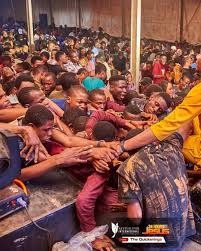
Similarly, Hannah’s prayer (1 Sam 1:9–18) was mistaken for drunkenness. Yet her prayer was silent, focused, and deeply interior. Her so-called “madness” was not emotional frenzy but faith-filled desperation, and its fruit was Samuel. Scripture consistently shows that true intensity may be misjudged externally, but it is never chaotic or performative. Put differently; Hannah did not come to the temple to be judged drunk; she did not work herself to that name; neither was it her prayer point, rather she poured her heart to God.
Prophets, Christ, and the Cost of Truth
Throughout Scripture, prophets are routinely branded as mad. Hosea declares, “The prophet is a fool, the man of the spirit is mad” (Hos 9:7), not as divine judgment but as Israel’s rejection of correction. Labeling the prophet mad becomes a tactic to silence truth and reject their voice. Jesus Himself was accused of being “beside Himself” (Mark 3:21), and later of having a demon (John 10:20). Paul, standing before Festus, was told, “You are mad” (Acts 26:24). His reply is decisive: “I speak words of truth and soberness.” The Gospel appears foolish to worldly logic, but never irrational or disorderly.
Even Christ’s agony in Gethsemane (Luke 22:44), where His sweat fell like drops of blood (hematohidrosis); was not hysteria but total obedience under spiritual pressure. If you under the biological concept of hematohidrosis then, you will understand what happened to Jesus at Gethsemane. In the final analysis, the intensity of his prayer did not produce confusion but submission: “Not my will, but Yours be done.”
What Scripture Never Endorses
At this point, Scripture is unambiguously clear. The Bible never glorifies: Disorder over discipline; fenzy over obedience; noise over discernment; self-display over God-centeredness.
Paul states clearly: “God is not a God of disorder but of peace” (1 Cor 14:33). The fruit of the Spirit includes self-control (Gal 5:23). Any spirituality that celebrates confusion, madness, impulsiveness, or attention-seeking behaviour misrepresents the Holy Spirit.
When Paul says, “If we are beside ourselves, it is for God” (2 Cor 5:13), he is not endorsing chaos but radical surrender; a life that contradicts comfort, convenience, and self-preservation. This kind of “madness” is not claimed; it is ascribed by those unsettled by faithfulness. It is not declared in a prayer house; but seen in the battle field – the courage against sin and Babylonian character.
The Grave Error of Modern Usage
 It is important to state unequivocally that no one in Scripture ever declares himself mad in the spirit. Madness is always a label given by observers, never a title claimed by the faithful. From the street, we already know that a truly “mad” person does not announce his madness. Rather he comports himself as though he is normal; onlookers know they are not.
Therefore; to publicly summon people to “be mad in the spirit” is a theological contradiction. It turns what Scripture treats as misunderstood obedience into manufactured exhibition. Authentic zeal does not need advertisement. It speaks through integrity, sacrifice, moral courage, and consistency in everyday life.
A lecturer who refuses a billion-naira bribe will be called mad. A young woman with trendy curves; who chooses decency in a culture of exploitation will be mocked. A believer who stands for justice when silence is safer will be labeled extreme. These are not chaotic actions; they are deliberate, disciplined, and moral. That is biblical “madness.”
Conclusion
To be “mad in the spirit,” properly defined, is to love God so profoundly and honestly that the world cannot make sense of your decisions. That’s not fanaticism. That is discipleship. In a culture obsessed with loudness and exhibition, true holiness can appear overbearing. However, Scripture and history demonstrate that it is this mistaken obedience, rather than emotional disorder, that renews prayer, purifies worship, builds the Church, and advances God’s Kingdom. Anything less might be loud, but it is not biblical.
